- contact@svtbs.in
- Vadodara, Gujarat 390007

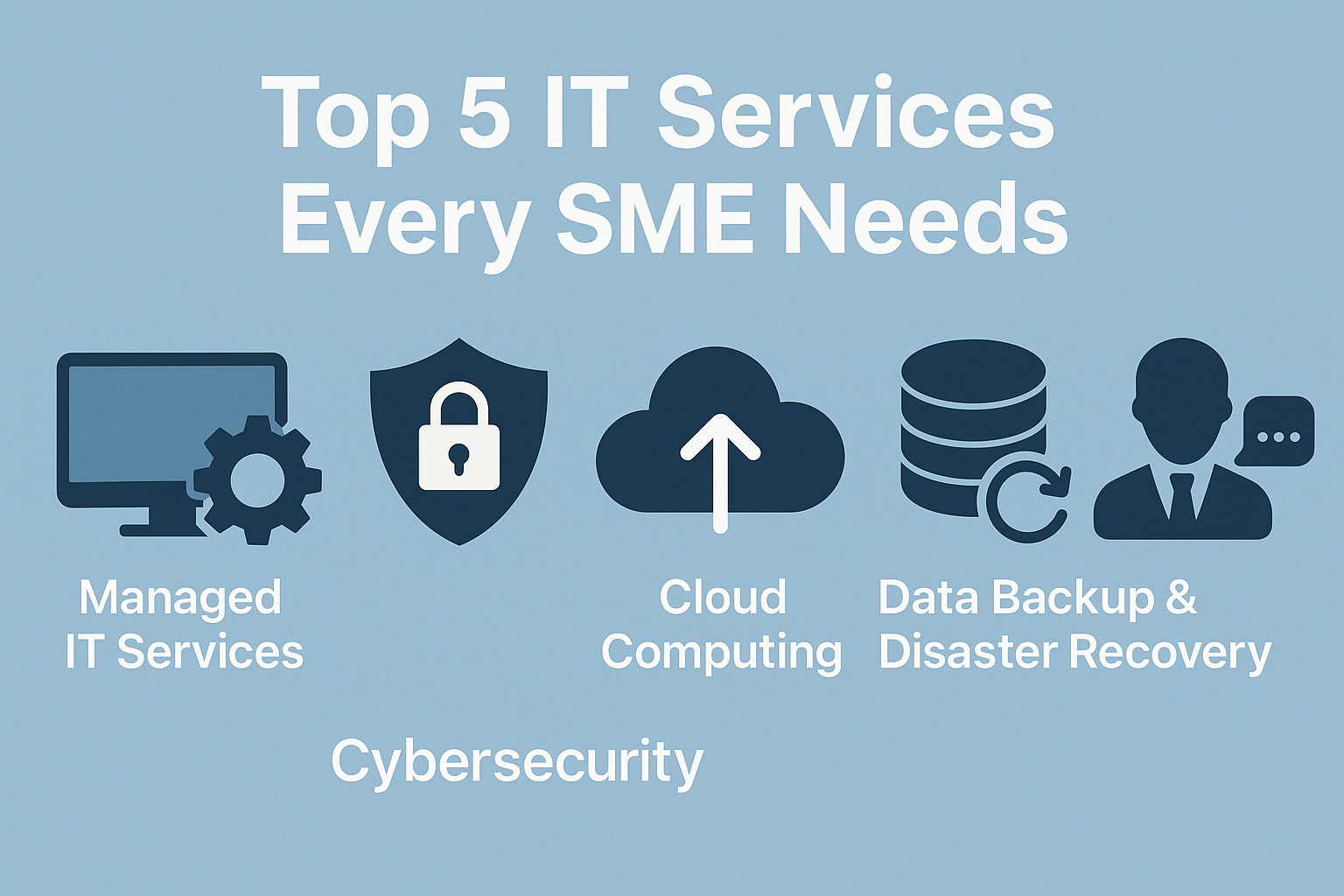
Top 5 IT Services Every SME Needs
04
Jul
Introduction: The Digital Backbone of SME Success
In the increasingly competitive and technology-driven business landscape, Small and Medium Enterprises (SMEs) must leverage the power of IT services to thrive. Gone are the days when information technology was considered a luxury accessible only to large corporations. Today, IT services form the foundation of business operations for companies of all sizes. For SMEs in particular, they offer an unprecedented opportunity to level the playing field, drive efficiency, protect data, and enable scalability.
The need for robust, reliable, and secure IT infrastructure is no longer optional; it is a business imperative. With threats like cyberattacks, data breaches, and IT downtime lurking in the shadows, SMEs must invest wisely in core IT services that address both operational needs and strategic goals. This blog explores the top 5 IT services every SME needs to remain competitive, secure, and future-ready. From managed IT services to data backup and cybersecurity, each component plays a pivotal role in ensuring operational excellence and business continuity.
In the sections below, we will delve deep into each IT service, highlighting its importance, benefits, and implementation considerations, ensuring SMEs are well-equipped to make informed decisions.
1. Managed IT Services: The All-in-One Support System
Managed IT services are the cornerstone of a strong IT strategy for SMEs. They refer to the practice of outsourcing your business’s IT operations and responsibilities to a third-party provider, often called a Managed Service Provider (MSP). These services encompass everything from infrastructure management and help desk support to software updates and IT consultancy.
For SMEs, the advantages of managed IT services are multifaceted. First and foremost, they provide cost-effective access to expert IT professionals without the overhead of maintaining an in-house team. This enables businesses to redirect internal resources towards core functions like sales, marketing, and product development.
One of the most valuable benefits is proactive monitoring and maintenance. MSPs continually monitor your systems, identify issues before they become problems, and apply preventive measures. This minimizes downtime, enhances productivity, and keeps operations running smoothly.
Additionally, MSPs often offer scalable solutions that grow with your business. Whether you're adding new users, opening a new branch, or migrating to the cloud, your MSP can adapt your IT infrastructure accordingly. This flexibility is crucial for SMEs that are constantly evolving.
Security is another significant area where managed services shine. MSPs implement robust cybersecurity measures, such as firewalls, antivirus software, and patch management, ensuring your data is protected from unauthorized access and cyber threats. Moreover, they help you remain compliant with regulatory standards like GDPR, HIPAA, or ISO.
For SMEs looking to remain agile, responsive, and competitive, managed IT services offer a comprehensive, reliable, and strategic solution. When selecting an MSP, SMEs should evaluate experience, service level agreements (SLAs), and client testimonials to ensure they are choosing the right partner.
2. Cybersecurity Services: Shielding Your Digital Assets
Cybersecurity is arguably the most critical IT service every SME must prioritize. The digital world is fraught with cyber threats ranging from phishing and ransomware to malware and data theft. SMEs often become prime targets because attackers assume they lack robust security infrastructure. Therefore, investing in cybersecurity services is not just wise—it’s essential.
Cybersecurity services for SMEs include a variety of protective measures such as firewalls, intrusion detection systems, endpoint protection, and advanced threat intelligence tools. These tools work in tandem to defend the organization’s network, data, and devices from malicious activity.
One of the foundational elements is conducting regular security assessments. These assessments help identify vulnerabilities in your systems and create a roadmap for remediation. Following this, businesses can implement multilayered security measures that cover network, application, and user-level threats.
Employee training is another critical component of cybersecurity. Human error is a leading cause of security breaches. By educating staff on best practices like recognizing phishing emails, using strong passwords, and adhering to security protocols, SMEs can create a human firewall that complements their technical defenses.
A comprehensive cybersecurity strategy also involves having an incident response plan. In the unfortunate event of a breach, an effective response plan can significantly minimize damage, ensure business continuity, and maintain stakeholder trust. This includes identifying the breach, containing it, eradicating the threat, and communicating with affected parties.
Moreover, with the rise of remote work, endpoint security has become more important than ever. Employees accessing company data from various locations can inadvertently expose sensitive information. Cybersecurity services ensure that devices are encrypted, networks are secure, and VPNs are in place.
For SMEs, a cybersecurity breach can result in severe financial losses, reputational damage, and legal ramifications. Therefore, cybersecurity services are not just about defense; they are about enabling safe growth and sustaining business integrity in the digital age.
3. Cloud Computing Services: Flexibility and Scalability On-Demand
Cloud computing has revolutionized the way SMEs operate by offering flexibility, scalability, and cost savings. Cloud services enable businesses to access computing resources—such as storage, databases, and applications—over the internet, without the need for on-premise hardware.
There are three primary types of cloud services: Infrastructure as a Service (IaaS), Platform as a Service (PaaS), and Software as a Service (SaaS). Each serves a unique purpose and can be tailored to meet the specific needs of an SME. SaaS applications like Microsoft 365 or Google Workspace enhance collaboration and productivity, while IaaS solutions provide the infrastructure backbone for custom applications and websites.
One of the biggest advantages of cloud computing for SMEs is cost-efficiency. Instead of investing heavily in hardware and software, businesses pay for what they use, often on a subscription basis. This pay-as-you-go model frees up capital for other strategic initiatives.
Cloud computing also supports remote work and collaboration. Employees can access files, share documents, and communicate in real-time from any device with internet connectivity. This has become especially valuable in the post-pandemic era, where hybrid and remote work models are the norm.
Data security and backup are other areas where cloud services excel. Leading cloud providers offer built-in redundancy, regular backups, and robust disaster recovery options. This ensures that even in the event of data loss or cyberattack, your business can quickly resume operations.
Moreover, cloud services are highly scalable. As your business grows, you can easily increase your cloud resources without overhauling your infrastructure. This agility allows SMEs to adapt to market changes quickly and efficiently.
By leveraging cloud computing services, SMEs can drive innovation, improve operational agility, and stay ahead of the competition—all without the burden of maintaining complex IT environments.
4. Data Backup and Disaster Recovery: Preparing for the Unexpected
Data is the lifeblood of any business, and for SMEs, losing critical data can be catastrophic. That’s why data backup and disaster recovery (DR) services are essential components of a robust IT strategy. These services ensure that your business can recover swiftly from data loss incidents, whether due to cyberattacks, hardware failures, or natural disasters.
Data backup involves creating copies of your digital files and storing them securely, either on-site, off-site, or in the cloud. Regular backups help ensure that data can be restored to a previous state in case of accidental deletion, corruption, or theft. SMEs should adopt the 3-2-1 backup rule: keep three copies of your data, store two on different media, and one off-site or in the cloud.
Disaster recovery, on the other hand, refers to the broader strategy of restoring IT infrastructure and operations following a disruptive event. A well-crafted DR plan outlines the steps to recover data, systems, and networks, and defines roles, responsibilities, and recovery timelines.
For SMEs, having an effective backup and disaster recovery strategy reduces downtime, prevents data loss, and safeguards business continuity. It also builds customer trust, as clients are more likely to remain loyal to businesses that can weather disruptions seamlessly.
Modern DR services often include features like automated failover systems, virtual server replication, and cloud-based recovery. These tools enable SMEs to restore operations quickly, sometimes within minutes, rather than days.
SMEs must also conduct regular testing of their backup and DR systems to ensure they function as intended. A backup that hasn't been tested is a backup that can’t be trusted.
In summary, investing in data backup and disaster recovery services is not just about protection—it’s about peace of mind. It demonstrates a commitment to resilience and preparedness that is vital in today’s unpredictable digital environment.
5. IT Consulting Services: Strategic Guidance for Smart Growth
As SMEs navigate digital transformation, the role of IT consulting services becomes increasingly important. These services provide expert guidance on how to align technology with business goals, optimize IT investments, and stay ahead of technological trends.
IT consultants assess the current state of an SME’s IT environment, identify gaps or inefficiencies, and recommend improvements. This may involve implementing new systems, upgrading legacy software, or transitioning to cloud platforms. Consultants also help businesses choose the right technologies that fit their size, industry, and strategic objectives.
One of the main benefits of IT consulting is the ability to gain an outside perspective. SMEs often face the challenge of being too close to their operations to see what needs fixing. A consultant brings fresh insights, best practices from other industries, and the ability to identify opportunities for innovation.
Consultants also play a critical role in project management, ensuring that IT initiatives are completed on time, within budget, and aligned with business outcomes. From planning and vendor selection to deployment and training, they guide SMEs through every phase of the IT lifecycle.
Additionally, IT consultants can assist with regulatory compliance, cybersecurity policies, and risk management strategies. For SMEs operating in sectors with strict compliance requirements, such as healthcare or finance, this expertise is invaluable.
In a rapidly evolving digital landscape, staying current with emerging technologies is a full-time job. IT consulting services provide SMEs with the knowledge and tools needed to remain agile, competitive, and future-ready.